

News

|
服务热线 000 |

|
联系电话 000 |

|
电子邮箱 000 |
Agrochemical Encyclopedia
Nine points to note when applying basal fertilizer to apple trees in autumn
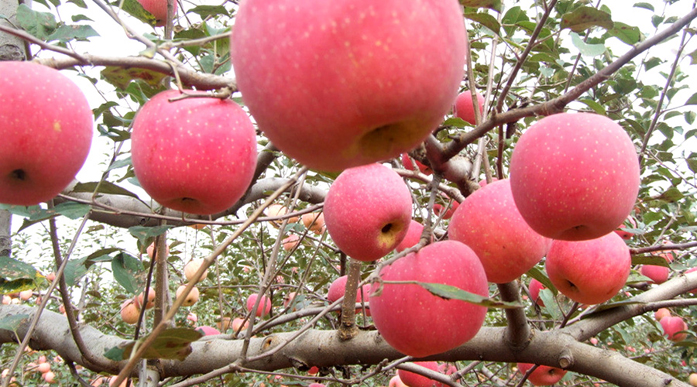
Pay attention to the timing of fertilization. For mid- and late-maturing varieties, basal fertilizer should be applied in autumn before or after fruit harvest, and it is better to apply it early rather than late. At this time, the temperature is high and the rainfall is high, so the basal fertilizer has sufficient time to decompose. The leaves have not yet declined and have strong photosynthetic function. Nutrients flow back to the roots. It is the peak of root growth for fruit trees. Broken roots are easy to heal, and a large number of branch roots and absorbing roots can be produced, which is beneficial to increase the nutritional level of the tree.
Note that the best area for fertilization is generally selected at the edge of the projection of the fruit tree crown and slightly away from it. Fertilization in the whole garden should also be 1 meter away from the trunk. In terms of depth, the root strips within the range of 10 to 35 cm from the ground surface account for about 80% of the total root volume, and the fertilization depth should be about 50 cm. Note that the fertilization method, whether it is ring ditch fertilization, radial ditch fertilization or strip ditch fertilization, or whole garden fertilization, can not make the fertilizer clump into blocks. The well-rotted organic fertilizer, chemical fertilizer, etc. should be fully mixed with the rhizosphere soil to make the fertilizer dispersed and breathable, and slowly release nutrients for the tree to absorb, so as to improve the utilization rate of nutrients. Pay attention to protecting the root system, especially the fine roots growing on the lateral roots at all levels. After the large roots exposed by the ditch are turned over, they should be fully stretched and buried in the loose soil, and buried as they are turned over to prevent the roots from being dried out by long-term wind and sun. At the same time, the broken roots should be pruned with sharp scissors to facilitate their early healing and rooting. Pay attention to applying more organic fertilizers and continuous application of organic fertilizers, which can effectively improve the soil. The organic matter content of high-quality and high-yield orchards should reach 2% to 3%, and 1.5 to 2 kilograms of organic fertilizer should be applied for every kilogram of apples. Note that the organic fertilizer must be decomposed. Mix manure, grass, straw, etc., add appropriate amount of water, seal the pile with thin mud, and then treat it with high temperature composting. Apply it after the fertilizer is fully decomposed and the nutrients are initially decomposed. Pay attention to reasonable formulation. Fruit trees have a certain proportion of demand for various elements. Young fruit trees require more phosphorus, which is generally twice that of nitrogen and potassium. Therefore, nitrogen, phosphorus and potassium can be formulated at 1:2:1. After entering the peak fruit-bearing period, fruit trees need more nitrogen and potassium. Nitrogen, phosphorus and potassium can be formulated at 2:1:2. Pay attention to the appropriate amount of micro-fertilizer. When the demand for micro-fertilizer is insufficient, fruit trees are prone to deficiency. Iron deficiency will cause chlorosis, and zinc deficiency will cause small leaf disease. Commonly used micro-fertilizers include ferrous sulfate, zinc sulfate and borax. However, it should be noted that ferrous sulfate will quickly turn into insoluble compounds when applied directly to the soil, so it is better to apply it at the same time as organic fertilizer. Borax is best used in combination with organic fertilizers, nitrogen fertilizers, and phosphate fertilizers. Pay attention to the acidity and alkalinity of fertilizers. If a certain fertilizer is applied alone for a long time, it is easy to change the pH of the soil. Acidic fertilizers and alkaline fertilizers cannot be applied at the same time. Acidic fertilizers should be applied in alkaline soils, such as ammonium sulfate, superphosphate, ammonium chloride, potassium chloride, potassium sulfate, etc.; alkaline fertilizers should be applied in acidic soils, such as plant ash, lime nitrogen, calcium magnesium phosphate fertilizer, steel slag phosphate fertilizer, and sodium nitrate. The correct use of acidic and alkaline fertilizers can improve fertilizer utilization and gradually improve the soil, which is conducive to the healthy growth of fruit tree roots.


