

News

|
服务热线 000 |

|
联系电话 000 |

|
电子邮箱 000 |
Agrochemical Encyclopedia
Fertilization tips for red pomelo
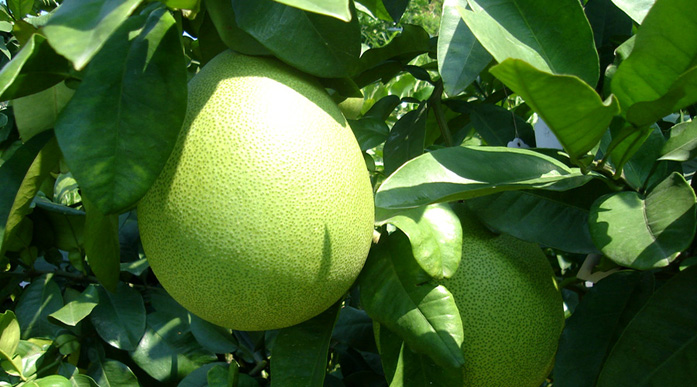
1. The high yield and harvest of red-fleshed honey pomelo depends on the "winter". Good or bad winter management determines the main issue of the yield in the next year. In winter, red-fleshed honey pomelo begins to enter the period of flower bud morphological differentiation and flower bud differentiation. It is necessary to timely implement various winter management technical measures to promote strong trees and flowers in order to win a good harvest in the next year. It is particularly important to apply post-harvest fertilizers from "Frost Descent" to "Beginning of Winter" to restore the vigor of honey pomelo trees after high yields. Apply winter base fertilizer from "Winter Solstice" to "Minor Cold". In winter, because the pomelo tree is in a semi-dormant state, the root activity is reduced, the temperature is low, there is little rain, and the fertilizer decomposes slowly. The applied fertilizer has little direct impact on the root system. Based on the principle that one-time fertilizer can be applied more, hole application and ditch application are adopted.
2. Spring is the early stage of the pomelo rooting, spring shoots, flower spikes, flowering, and young fruiting. This period is the season of frequent rain or moderate rain in spring. The main method of fertilization during this period is to apply thin fertilizer frequently. The fertilization method is to apply fertilizer in the sunny days after rain, and to apply liquid fertilizer in dry days. This is to avoid affecting the root growth, especially to prevent the root of the pomelo from rotting, which will weaken or kill the pomelo tree.
3. Summer is the period of rooting, growing summer shoots, young fruits and fruit enlargement of grapefruit. This period is an important period for fertilization throughout the year, and it is also the period when pests and diseases are most likely to occur. This period is a season of heavy rain and typhoons in summer. The fertilization method must mainly adopt the method of thin fertilizer and frequent application. It is best not to apply too much fertilizer at one time, or apply fertilizer in holes or ditches, etc., so as to avoid long-term heavy rain and water accumulation in ditches. For mountain paddy fields, plain fields, and low-bed paddy fields, grapefruit should adopt the method of thin fertilizer and frequent application, which can mainly make the fertilizer concentrated for the grapefruit root system to absorb and reduce fertilizer loss. Due to the one-time heavy fertilizer, water accumulation in holes or ditches will cause the grapefruit roots to rot, resulting in the weakening of the tree and even the danger of death. The rainy season in late summer and early autumn, before the Great Heat, accounts for more than 85% of the annual fertilizer application.
4. Autumn is the period when the pomelo roots grow and the pomelo fruit expands rapidly. Later, the fruit turns to water and sugar accumulation in the juice cells to make the flesh full. This period is the season of typhoons and heavy rains in most years, and it is the main period of pests and diseases. During this period, the pomelo mainly uses less fertilizer. It relies on the fertilizer application in winter, spring and summer, which accounts for more than 85% of the annual amount, and the soil fertility to promote the expansion of the fruit and the fullness of the flesh, which is also the reason to prevent the weakness and death of the pomelo tree.


