

News

|
服务热线 000 |

|
联系电话 000 |

|
电子邮箱 000 |
Agrochemical Encyclopedia
How to fertilize rapeseed in early winter
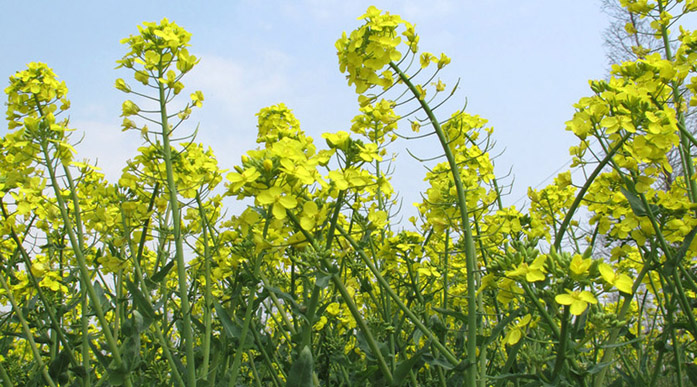
The Beginning of Winter is on November 7th, which means the beginning of winter. At this time, the cold air in the north has become quite strong, and sometimes there will be strong winds, cooling, rain and snow. From the average of many years, November is the month with the most cold waves. Crops may suffer from cold damage and frost damage. In most parts of China, the precipitation decreases significantly around the Beginning of Winter, the air generally becomes drier, and the soil loses more water. Therefore, it is very important to conserve moisture and prevent drought in the planting areas of winter wheat and winter rapeseed. The quality of soil moisture conditions is closely related to the growth of crops in the seedling stage and wintering. A Jiangxi folk proverb says: "Beginning of Winter Rape and Little Snow Wheat"; there is also a folk proverb that says "After the beginning of winter, plowing the land can increase the nutrients in the soil."
Rapeseed is China's only winter oil crop and a good crop for land conservation. It has a well-developed root system and secretes a large amount of organic acid, which can decompose and utilize the insoluble phosphorus in the soil. China is a major producer of winter rapeseed, which is widely distributed in the provinces of the Yangtze River Basin and the Yunnan-Guizhou Plateau. Scientific fertilization is an important link in the high yield, high quality and high efficiency of winter rapeseed. Rapeseed is a crop that requires more fertilizer. It requires more nitrogen, phosphorus and potassium than rice, and is particularly sensitive to phosphorus and boron. Every 100 kilograms of rapeseed needs to absorb 8 to 11 kilograms of nitrogen, 3 to 5 kilograms of phosphorus, and 8.5 to 12.8 kilograms of potassium. When nitrogen is deficient, rapeseed plants are short, have fewer branches, and have lower yields. However, when nitrogen is excessively supplied, it will also cause an increase in protein in the grains and a decrease in oil content, so nitrogen fertilizers should be applied reasonably. Only balanced fertilization can ensure that the yield and oil content of rapeseed remain at a high level, while partial nitrogen fertilizer application will cause an imbalance of nitrogen, phosphorus and potassium, which will significantly reduce the oil content of rapeseed. From the current production perspective, the rational application of phosphorus, potassium and boron fertilizers can increase the oil content of rapeseed and improve the fatty acid properties of the oil.
Regarding the dosage and ratio of balanced fertilization of rapeseed. Under the premise of making full use of organic fertilizers, nitrogen, phosphorus and potassium fertilizers should be applied according to soil fertility level and yield targets, mainly to control the amount of nitrogen fertilizer and increase the application of phosphorus and potassium fertilizers. Taking the nutrient management recommendations for rapeseed in Hubei Province as an example, the recommended amounts of nitrogen, phosphorus and potassium fertilizers are as follows: for yield levels above 200 kg/mu, it is recommended to apply 11-13 kg/mu of nitrogen fertilizer (pure N), 4-6 kg/mu of phosphorus fertilizer (pure P2O5), 7-9 kg/mu of potassium fertilizer (pure K2O), and 1.0 kg/mu of borax; for yield levels of 100-200 kg/mu, nitrogen fertilizer (N) is 8-10 kg/mu, phosphorus fertilizer (P2O5) is 3-5 kg/mu, potassium fertilizer (K2O) is 5-7 kg/mu, and 0.75 kg/mu of borax is recommended.
In terms of fertilization period, since rapeseed has a long growth period, applying nitrogen fertilizer and potassium fertilizer in batches can improve the utilization rate. To this end, the number of fertilizations should be appropriately increased. In addition to the base fertilizer, winter fertilizer, bud fertilizer and flower fertilizer should also be applied; for direct-seeded and inter-seeded rapeseed, it is necessary to add a seedling fertilizer in winter. The divided application of nitrogen and potassium fertilizers should appropriately reduce the amount of base fertilizer and increase the application ratio during the growth period. Specific fertilization period: For transplanted rapeseed: 60% of the total nitrogen and potassium fertilizers are applied as base fertilizer, 20% as winter fertilizer (50 days after transplanting), and 20% as bud fertilizer (80 days after transplanting). For direct-seeded rapeseed: 40% of the total nitrogen fertilizer is applied as basal fertilizer, 30% as seedling fertilizer (about 25-30 days after sowing), 15% as winter fertilizer (about 80 days after sowing), and 15% as stalk fertilizer (about 110 days after sowing); 60% of the total potassium fertilizer is applied as basal fertilizer, 30% as winter fertilizer (about 80 days after sowing), 10% as stalk fertilizer (about 110 days after sowing), and the rest of the fertilizer is applied as basal fertilizer.
There is an important problem in current production, that is, basal fertilizer should be applied deeply to promote the growth of rapeseed root system. Taking direct-seeded rapeseed as an example, it has a clear taproot, and the lateral roots are distributed along the taproot at various levels in the soil, and the lateral roots are not well developed. If fertilizer is only applied to the surface of the soil, it will guide the rapeseed root system (including the taproot) to grow only on the surface of the soil without deep rooting, forming "floating roots", resulting in unstable rooting of rapeseed, reduced ability to absorb soil water and fertilizer, and prone to seedling collapse, fertilizer loss, drought and other phenomena. Winter rapeseed often encounters various natural disasters or adverse conditions during its growth period, such as the freezing snow disaster in early 2008, the drought in early 2009, and unfavorable factors such as spring rain and wind when the rapeseed blooms every year, as well as rainy weather that may be encountered during the maturity period, which are limiting factors for rapeseed production across the country.
In short, balanced fertilization is beneficial to the safety, high yield and high quality of winter rapeseed.


