

News

|
服务热线 000 |

|
联系电话 000 |

|
电子邮箱 000 |
Soil Lecture Hall
Soil degradation worsens, food security at risk
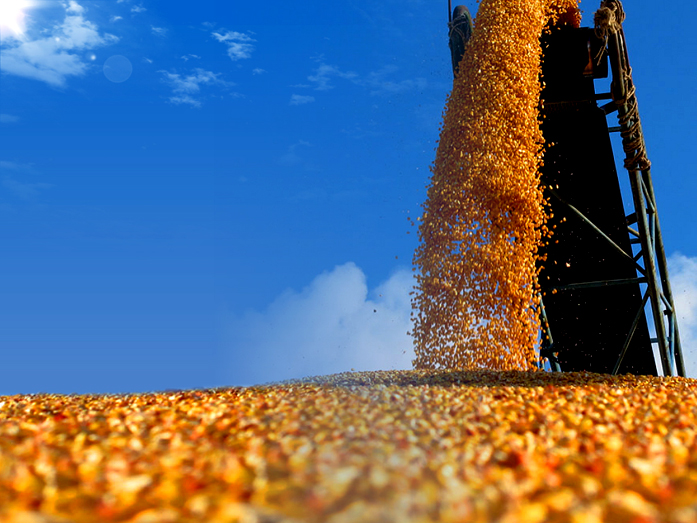
As the contradiction between population, resources and environment intensifies, the quality of soil and land resources on which human beings depend for survival and development has deteriorated more and more seriously. Since the 1960s, countries around the world have paid close attention to this issue. The situation is particularly serious in my country, where arable land accounts for only 10% of the world's total, but the population accounts for 22%. The per capita arable land area in my country has been reduced to 1.4 mu a few years ago, which is only 40% of the world average. The alarm of breaking the 1.8 billion mu arable land red line has long been sounded, and the quality of these 1.8 billion mu arable land is accelerating. With the reduction in arable land area and the decline in quality, how can we ensure food security? This is a worrying issue.
China's soil degradation is widespread, severe and multi-type. The total area of soil degradation is 4.6 million km2, accounting for 40% of the country's total land area and 1/4 of the total area of soil degradation in the world. Among them, the total area of soil erosion is 1.5 million km2, almost 1/6 of the country's total land area, and 500,000 tons of soil are lost each year, and the lost soil nutrients are equivalent to 1/2 of the country's total fertilizer production. Soil environmental pollution is becoming more and more serious. In the early 1990s, the area of farmland polluted by industrial waste alone reached 60,000 km2, equivalent to the total cultivated land area of 50 large agricultural counties. China's soil degradation occurs in a wide area, and soil degradation of different types and degrees occurs all over the country. In terms of regions, salinization is mainly occurring in North China, desertification is mainly occurring in the northwest, soil erosion is mainly occurring in the Loess Plateau and the middle and upper reaches of the Yangtze River, rockification is occurring in the southwest, and soil fertility decline and environmental pollution are mainly manifested in the eastern region. Overall, soil degradation has affected more than 60% of China's cultivated land. The speed of soil degradation in China is very alarming. The occupation of cultivated land alone reached more than 2.3 million hectares in the 1980s, and has been accelerating in recent years. Of this, state and local construction accounts for about 20%, and farmers' housing construction accounts for 5%-7%. The speed of soil erosion is also very noteworthy, with the area of soil erosion increasing from 1.5 million hectares in 1949 to 2 million hectares in the mid-1990s. In the past 30 years, soil acidification has continued to expand, with an average decrease of 0.6 units, and the area of acidic cultivated land (pH 1.3) has increased by 1.1%. Although soil degradation is a very complex issue, the cause of its degradation is the result of the combined effects of natural and human factors. Natural factors include destructive natural disasters and abnormal soil-forming factors (such as climate, parent material, topography, etc.), which are the basic causes of the natural soil degradation process (erosion, desertification, salinization, acidification, etc.). The disharmony between man and nature, that is, human factors, is the root cause of the aggravation of soil (land) degradation. Human activities not only directly lead to the occupation of natural land, but more dangerously, human beings blindly develop and utilize agricultural resources such as soil, water, air, and organisms (such as deforestation, overgrazing, unreasonable agricultural cultivation, etc.), causing a vicious cycle of the ecological environment. The essence of soil degradation is the reduction in the quantity and quality of soil (land) resources. Soil resources are limited in quantity, not unlimited. With the continuous intensification of soil degradation, the amount of soil (land) is gradually decreasing. For China, which has a large population and limited land, the potential The greater danger is the reduction of soil quality. In this sense, improving and fertilizing the soil, keeping the soil fertility fresh, and improving soil quality are important tasks with strategic status. It can be seen that soil degradation and soil quality are two aspects of a closely related problem. Therefore, we must correctly understand the relationship between man and nature, and do a good job in ecological environment construction, regional development, water conservancy, rational farming, and soil fertilization in accordance with natural laws to prevent the degradation of soil quality. The primary task of preventing and controlling soil degradation is to protect cultivated land soil, because cultivated land soil is the most precious soil (land) resource on which human beings depend for survival, the most basic means of production for agricultural production, and the basis of agricultural production technology measures. Although cultivated land soil degradation is affected by adverse natural factors, human high-intensity utilization, unreasonable planting, farming, fertilization and other activities are the main reasons for the imbalance of cultivated land soil ecology, deterioration of environmental quality, decline in regeneration capacity, and decline in productivity. Therefore, to prevent and control soil degradation, we must first effectively protect the cultivated land soil, which is of special importance to agricultural production.


