

News

|
服务热线 000 |

|
联系电话 000 |

|
电子邮箱 000 |
Soil Lecture Hall
Disappearing Minerals from Soil and Our Health
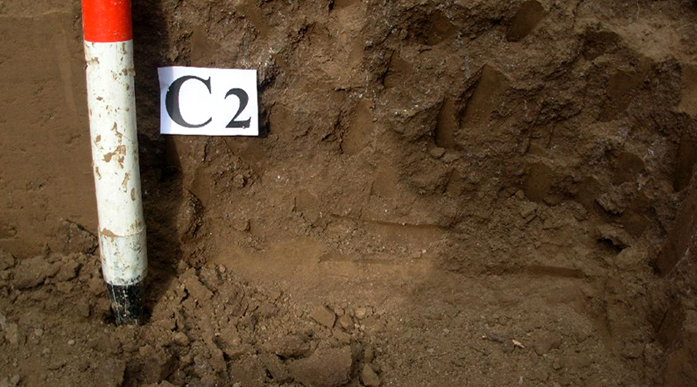
Two-time Nobel Prize winner Linus Pauling once said, "Every disease, every illness can be traced back to mineral deficiency." Most of the problems we face today begin with foods grown on mineral-poor lands and the animals that eat them.
At the beginning of the last century, farmers discovered the rapid results of chemical fertilizers. Crop yields began to increase, but the soil was only able to absorb three nutrients. However, before the use of these nitrogen fertilizers, there were 73 minerals and trace elements found in the soil. In just ten years, the land began to lack minerals and could no longer produce crops with balanced minerals.
With nitrogen, potash and phosphate fertilizers, crops can temporarily thrive. Even if the land is not supplemented with these 73 minerals and trace elements, farmers can still produce crops, but these crops will be deficient in minerals.
The following passages further prove the fact of mineral deficiency and the importance of mineral supplementation:
The fertility of the soil determines the health of all life.
In 1912, Nobel Prize winner Dr. Alexis Carrel predicted: "Minerals in the soil control the metabolism of plants, animals and humans."
In 1936, the U.S. Senate issued Document 264. It included this warning: "It is an alarming fact that there are no longer enough minerals on millions of acres of land, and the food produced from these lands (fruits, vegetables and grains) is making us hungry - no matter how much we eat, it is difficult to eliminate this hunger. Man today can never eat enough vegetables and fruits to supply his body system with the minerals needed for a perfect body, because his stomach cannot hold them."
In 1988, the Secretary of Health and Nutrition Report concluded that 15 out of every 21 deaths in the United States are related to nutritional deficiencies (almost 75%).
In 1992, national leaders around the world concluded in the Land Summit Report that in the past 10 years, the mineral loss of soils has exceeded 76% in European countries and 80% in the United States.
In 1994, the U.S. Congress reached an important conclusion that normal nutrient absorption can prevent chronic diseases.
Without nitrogen fertilizer, plants must rely on healthy microorganisms in the soil to produce nitrogen. This nitrogen helps plants absorb minerals in the soil. Plants must rely on microorganisms in the soil to grow. The number of microorganisms depends on the natural mixed fertilizers rich in minerals that replenish the soil. If the soil is not replenished with mineral-rich organic fertilizers, the microorganisms will quickly disappear. At this time, if you do not increase organic fertilizers to promote the growth of microorganisms, plants will not produce food.
With modern fertilizer technology, farmers have learned to skip the step of adding mineral-rich compost to the soil and directly add nitrogen fertilizer to the soil. This means that plants can directly absorb the minerals they need to grow. This will eventually lead to a sharp lack of minerals in agricultural products and land. To solve this problem, it is necessary to replenish minerals in the land and adopt organic farming methods.
Over the past five years, my hometown of Marin County, California, has suffered a tragic loss of thousands of oak trees from a strange disease called oak death. My wife, Polly, has been working hard to save our three acres of oak trees that are dying. After five years of experimentation and the help of many dedicated conservationists, Polly has found a cure.
You might not think of it -- her solution is mineral supplementation. Adding mineral ash to the soil around the oak trees helps the trees fight this disaster. Adding minerals to the soil causes the number of microorganisms to double every 28 minutes. Within weeks, millions of new microorganisms are created, busy making the nitrates necessary for the trees to absorb the new minerals.
Increasing the mineral content of the soil can cause the number of microorganisms to double every 28 minutes.
In the 1930s, awareness of mineral deficiencies began to grow, and the health food industry became popular. The government also declared that everyone needed nutritional supplements. A variety of mineral supplements and pills were available to the public. The movement quickly lost its appeal because mineral supplements simply didn't work. You can't feed your body rocks and expect it to be absorbed.
Even plants can’t absorb minerals directly. They need nitrates produced by microorganisms to absorb minerals from the soil. Pills don’t solve the problem. Enthusiasm for mineral supplements quickly faded because they didn’t work.
Although the understanding of trace elements was still new, researchers were discovering more about their importance every day. For example, the trace element boron is necessary for the body to absorb calcium. We knew that calcium was important, but we didn't know that trace elements were needed for calcium to be absorbed. If you don't get enough boron in your diet (because there is a lack of boron in the soil), your body can't absorb the calcium from food, drinking water, or supplements. In this way, people began to gradually realize the importance of all 73 minerals and trace elements.


