

News

|
服务热线 000 |

|
联系电话 000 |

|
电子邮箱 000 |
Soil Lecture Hall
The harm and control of heavy metal pollution in soil
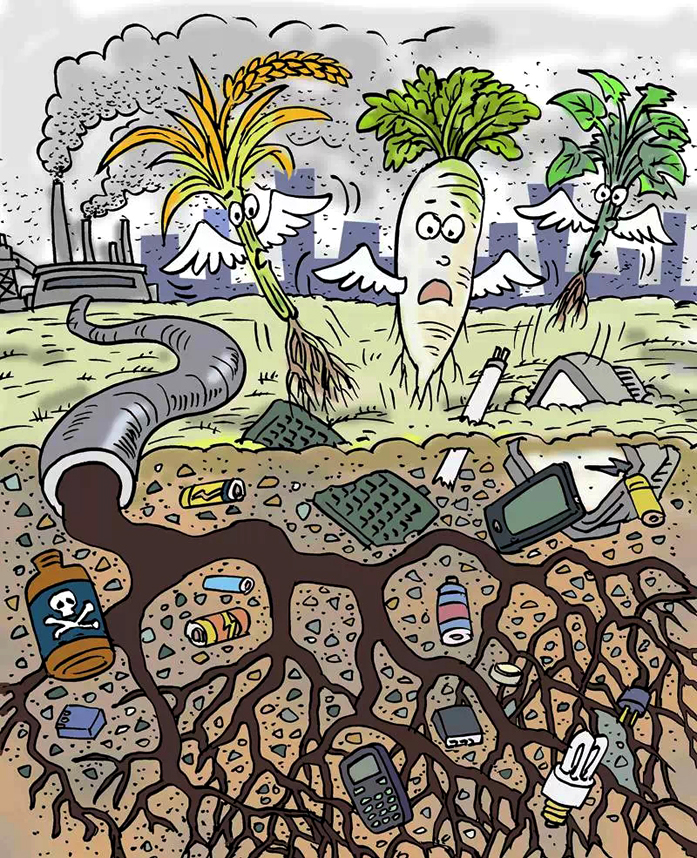
In recent years, "food safety" can be said to be the topic of greatest concern to the public. In recent years, many food safety incidents such as "cadmium rice" and heavy metal vegetables have made us realize that the soil on which we depend for survival has been polluted, and harmful substances have been "served" on our tables along with food and drinking water. But how serious is the soil pollution problem? How much impact does it have on the safety of agricultural products? From the fields to the tables, many people are eager to get an accurate answer.
The Ministry of Environmental Protection and the Ministry of Land and Resources released a national soil pollution survey report. The survey results show that the overall soil environmental situation in the country is not optimistic. Soil pollution is serious in some areas, and the environmental quality of cultivated soil is worrying. The national soil point-to-point exceeding standard rate is 16.1%, of which the proportions of slightly, mildly, moderately and severely polluted points are 11.2%, 2.3%, 1.5% and 1.1% respectively. In terms of soil pollution types, inorganic types are the main type, followed by organic types, and the number of points where inorganic pollutants exceed the standard accounts for 82.8% of all points that exceed the standard. In terms of pollutants exceeding the standard, the point-to-point exceeding standards rates of 8 inorganic pollutants, cadmium, mercury, arsenic, copper, lead, chromium, zinc and nickel, are 7.0%, 1.6%, 2.7%, 2.1%, 1.5%, 1.1%, 0.9% and 4.8% respectively; according to relevant persons in charge of the two ministries and commissions, the soil environmental quality is affected by the superposition of multiple factors, and my country's soil pollution is formed by long-term accumulation in the process of economic and social development. Human activities such as industrial and mining, agricultural production, etc. are the main causes of soil pollution or exceeding the standard. Therefore, soil pollution is particularly serious in some heavy metal-rich areas such as the economically developed central and eastern regions, the Yangtze River Delta, the Pearl River Delta, the old industrial base in Northeast China, and Hunan.
In the past year, many farmers in Hunan who make a living by growing rice and vegetables have suffered huge economic losses due to an element they don’t understand, “cadmium.” “Because the heavy metal content in our soil exceeds the standard, we can’t sell the vegetables we grow.”
The harm of heavy metal pollution in soil to crops and humans is as follows:
1. The migration of heavy metals in the soil-crop system directly affects the physiology, biochemistry and growth and development of crops, thereby affecting the yield and quality of crops. For example, "cadmium" is a toxic element that harms plant growth. If the "cadmium" in the soil is too high, it will destroy the chlorophyll structure of plant leaves, reduce the absorption of water and nutrients by the roots, inhibit root growth, cause plant physiological disorders and reduce yields. "Lead" in crop tissues can lead to a decrease in the intensity of oxidation, photosynthesis and fat metabolism, reduce water absorption, increase oxygen consumption, thereby hindering crop growth and even causing crop death.
2. Heavy metals can ultimately harm human health through the food chain. For example: "Cadmium" has significant biological toxicity and can cause a series of problems such as high blood pressure, cardiovascular and cerebrovascular diseases, and renal dysfunction. "Mercury" sinks directly into the liver after being ingested by the human body, causing great damage to the brain's visual nerves. "Arsenic" can cause skin pigmentation and lead to abnormal keratinization. "Chromium" can cause numbness of the limbs and mental abnormalities. "Lead" is one of the most toxic heavy metal pollutants. Once it enters the human body, it is difficult to eliminate and can directly damage brain cells, causing mental retardation, etc.
Heavy metal pollutants have poor mobility in soil, long retention time, and cannot be degraded by microorganisms; they can eventually affect human health through media such as water and plants. Soil heavy metal pollution and its treatment have become the focus of scientific circles and even the whole world. The methods for soil heavy metal pollution treatment can be summarized into four categories: thermodynamics, biology, agricultural engineering, and physical and chemical treatment. The thermal treatment method is limited to low remediation efficiency and high economic investment, accompanied by the emission of toxic gases and changes in basic soil properties. In the plant remediation method, plant screening, target plant biomass and remediation time will become key issues restricting its development; at the same time, due to the co-occurrence of pollution, the remediation efficiency of complex pollution and the remediation of agricultural soil will be subject to certain constraints. Deep plowing and soil import in agricultural engineering will destroy the natural properties of the soil and may also affect the safety of groundwater. The most feasible method, which is also the most common method in the world, is to adopt physical and chemical treatment methods; that is, mainly to add some passivation and repair agents to the contaminated soil (for example, spreading "Master Tian" soil conditioner, etc.) to reduce the effective concentration of heavy metals in the soil or change its redox state, thereby effectively reducing its mobility, toxicity and biological effectiveness.


